
What Makes a Domain Name "Premium"?
Length, real words, extension, and demand all decide whether a domain counts as premium. Here's what actually drives domain value. By Jeffrey Gabriel · Published September 14, 2026
.jpg)
What Makes a Domain Name “Premium”?
A premium domain is a short, memorable, commercially relevant, or highly brandable domain name that commands a price well above standard registration cost because of its inherent demand. What pushes a domain into that category is a combination of specific, measurable factors, not simply a gut feeling that the name “sounds good.” Here is the TL;DR answer: search the domain term. If you see a large number of commercially relevant results, including companies using the term, businesses advertising around it, products or services built around it, and strong search demand, you are probably looking at a premium domain. Pair that with a widely recognized domain extension, and the case becomes even stronger.
The Factors That Actually Drive a Domain’s Value
- Length — Shorter names are naturally scarcer. Most strong three and four letter domains and one word .com domains were registered decades ago, and very few ever become available.
- Real word or strong brandability — Dictionary words, common terms, and names that read naturally as brands generally outperform random or difficult to remember strings.
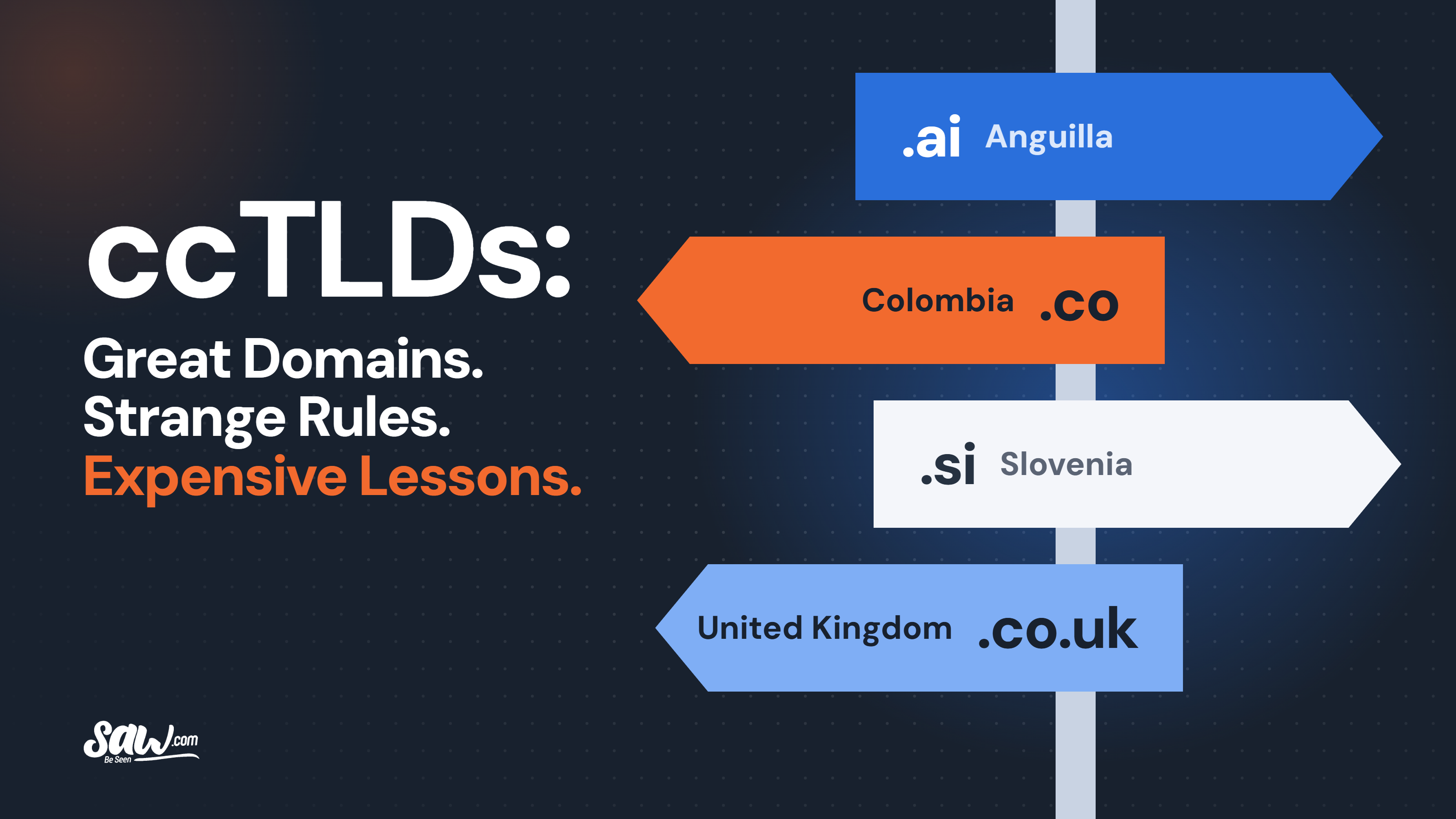
- Extension — .com continues to carry the greatest recognition, trust, and resale value for most buyers. Other extensions can also command significant value when they are widely adopted or particularly relevant to the category.
- Keyword demand — A domain that matches a commercially valuable search term already has businesses competing for the same customers, traffic, and attention.
- Commercial use — The more companies selling products or services around a word or phrase, the larger the potential buyer pool for the matching domain.
- Existing history — Older domains may have established backlinks, search engine visibility, traffic, authority, or strong metrics from platforms such as Ahrefs and Semrush. A clean, established history can add meaningful value.
- Comparable sales — What similar domains have actually sold for is one of the strongest indicators of market value. Length, extension, keyword quality, category, and buyer demand all need to be considered when comparing sales.
- Number of potential buyers — A name that could realistically be used by hundreds or thousands of companies is generally more valuable than one that appeals to only a handful.
- Memorability — Premium domains are easy to hear, remember, spell, and repeat. The less explanation a name requires, the stronger it tends to be.
- Category strength — Domains tied to large or growing industries such as finance, technology, health, artificial intelligence, insurance, travel, or ecommerce can attract significantly more demand than names in smaller commercial categories.
What Premium Domains Actually Sell For
Premium domain prices can range from a few thousand dollars to tens of millions, depending on the quality of the name, the extension, the category, the buyer pool, and the timing.
At the very top of the market, publicly reported sales show just how valuable exceptional domains can become. AI.com sold for $70 million in 2025, Voice.com sold for $30 million in 2019, and Sex.com sold for $13 million (By our Founder in 2010.)
Those are record level transactions, not typical sales.
Our own experience spans nearly every level of the premium domain market. Across our careers, the Saw.com team has been involved in more than $565 million in domain transactions. Our brokers have handled names including Sex.com, AI.com, Media.com, Data.ai, CO2.com, M1.com, FM.com, MR.com, Archive.com, Finally.com, and many others.
Sex.com sold for $13 million, setting a Guinness World Record at the time. We also brokered the previous sale of AI.com in 2021, years before the domain later changed hands again for $70 million.
Many premium domain transactions are never publicly reported, and the purchase price often remains confidential. That means public sales charts show only part of the market.
The real question is not what the most expensive domain ever sold for. It is what a specific domain is worth to the market today, who is likely to buy it, and what price a motivated buyer and seller can realistically agree on.
How to Tell If a Domain You Own Might Be Premium
The fastest way to move from a guess to a realistic value range is through a professional domain appraisal. A proper appraisal weighs the factors above against comparable sales, current market demand, the domain’s commercial potential, and what similar names are actually commanding.
Where Premium Domains Are Bought and Sold
Premium domains can be bought and sold in several ways. Some are publicly listed on domain marketplaces, broker websites, or landing pages. Others are owned by companies, investors, or individuals who are not actively marketing them for sale.
When a domain is listed, a broker can help evaluate the asking price, determine where there may be room to negotiate, and work toward better terms for the buyer.
When a domain is not listed, the process can be more involved. A domain broker may need to identify the real owner, find the right person to contact, determine how to approach them, and begin a confidential conversation about whether they would consider selling.
If you are trying to acquire a specific domain that is already registered, the process is covered in more detail in our guide on how to buy a domain that’s already taken.
Frequently Asked Questions
Does “premium domain” mean the same thing at every registrar?
No. Some registrars use the term “premium” for certain domains that are still available to register but carry a higher initial registration fee, renewal fee, or both. That is different from an aftermarket premium domain, which is already owned by someone and must be purchased from the current owner.
How much does a premium domain typically cost?
Premium domain prices vary enormously. A strong brandable domain may sell for a thousands of dollars, while category defining, one word .com domains can sell for six, seven, or even eight figures. The value depends on the specific name, extension, demand, commercial use, comparable sales, and potential buyer pool. A professional appraisal can provide a more realistic estimate for a particular domain.
Is a longer domain ever considered premium?
Yes. A longer domain can still be premium if it is an exact match for a valuable commercial phrase, highly memorable, widely used in an industry, or strongly aligned with how customers search for a product or service. In general, shorter domains tend to be more valuable, but length is only one factor.


.png)