
How to Negotiate the Price of a Domain Name
Learn how to negotiate a domain name purchase, from valuation and strategy to confidentiality, owner research, offers, counters, and knowing when to walk away. By Jeffrey Gabriel · Published September 15, 2026
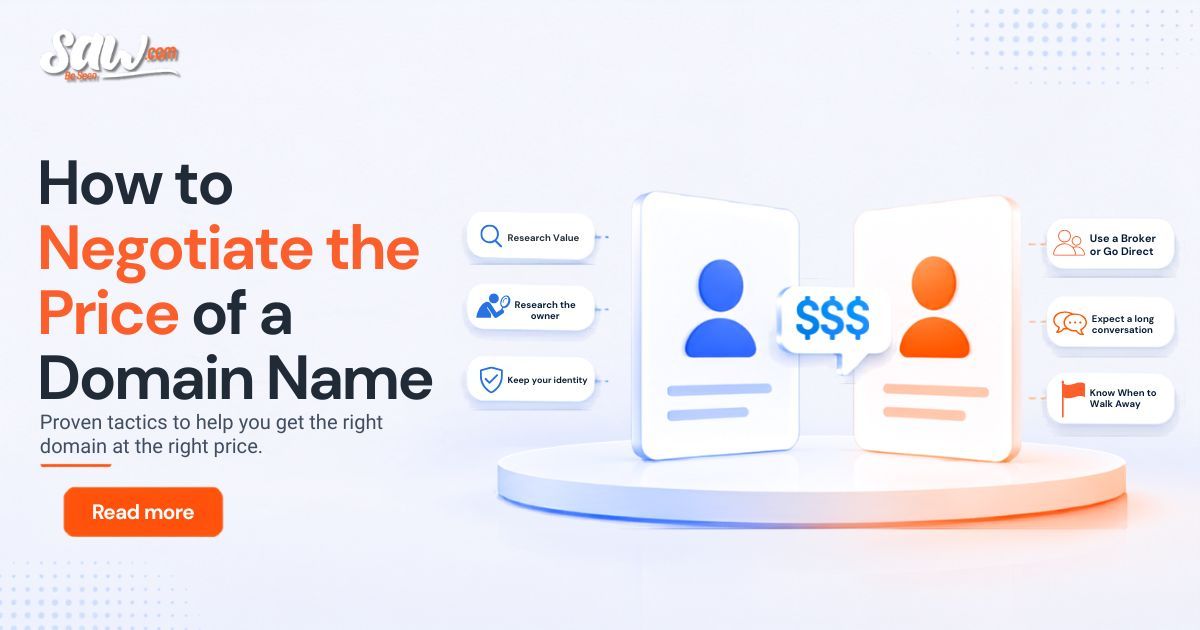
How to Negotiate the Price of a Domain Name
Negotiating for a domain name is closer to negotiating for a piece of property than buying a product off a shelf. There is usually one owner, one asset, and no fixed price.
The best negotiations start before the first offer is ever made. You need to understand what the domain is worth, who owns it, how motivated that owner may be, what is happening in the market, how quickly you need the name, and what you are prepared to spend.
The approach also changes depending on the situation. A domain listed publicly for sale requires a different strategy than one owned by an individual who has never considered selling. A domain sitting inside a large company may require an entirely different process just to get an offer in front of someone with the authority to consider it.
Research the Domain’s Value Before You Make an Offer
One of the biggest mistakes a buyer can make is choosing an opening offer without first understanding the value of the domain.
Start with an appraisal, comparable sales, current market conditions, commercial demand, the quality of the domain, its extension, and the number of realistic buyers for the name.
The goal is not simply to produce a valuation number. It is to establish reasonable expectations about where a transaction could actually happen.
A domain may have an asking price of $500,000 and realistically trade for considerably less. Another owner may have no asking price at all and require a substantial offer just to begin a conversation.
Understanding the market before making contact gives you a much better foundation for deciding what to offer and how far you are prepared to go.
Research the Owner Before You Negotiate
Knowing who owns the domain can be just as important as knowing what the domain is worth.
An individual domain investor, a founder who has owned a name for twenty years, and a Fortune 500 company holding a domain as a non-core asset may all react very differently to the same offer.
Research can tell you how long the owner has held the domain, whether they own other domains, whether the name is currently being used, whether it has been offered for sale before, and sometimes whether there have been previous attempts to sell it.
With large companies, identifying the company is often the easy part. The real work is determining who controls the asset, who has the authority to consider a sale, and how an offer needs to move through the organization.
Keep Your Identity, Budget, and Urgency Confidential
The seller does not need to know who you are, how badly you want the domain, or the maximum amount you are prepared to spend.
If an owner learns that the buyer is a well funded company, has announced a new product, raised capital, or needs the domain before a specific launch date, their expectations can change immediately.
This is one reason Saw.com uses a confidential process we call Stealth Acquisition.
We approach the owner on the buyer’s behalf without revealing the buyer’s identity or budget unless the client chooses to disclose it. The negotiation stays focused on the domain, the offer, and the market rather than the perceived resources of the person or company trying to buy it.
Have a Strategy Before You Make the First Offer
There is no universal formula for what percentage below an asking price you should offer.
The right opening offer depends on the domain, the owner, the asking price, the market, previous communication, your timeframe, and what you are ultimately prepared to spend.
Sometimes an aggressive opening offer creates room to negotiate. In other situations, an offer that is too low may cause the owner to disengage completely.
The purpose of the opening offer is to start a productive negotiation without unnecessarily showing the buyer’s ceiling.
At Saw.com, we determine the offer strategy before approaching the owner. That includes what to offer, how to present it, when to make it, what information to disclose, and how we plan to respond to the most likely counters.
Do Not Negotiate Against Yourself
Once an offer has been made, give the other side an opportunity to respond.
One of the easiest ways to increase the price of a domain is to make an offer and then raise it before the seller has even countered.
Silence does not necessarily mean rejection. Domain owners may take time to consider an offer, discuss it with partners, speak with management, review tax consequences, or simply decide whether they are ready to sell.
A disciplined negotiation gives each side room to make a decision rather than unnecessarily moving the price simply because a response has not arrived immediately.
Expect More Than One Conversation
Many domain negotiations do not happen in a single email exchange.
An owner may reject the first offer. They may counter at a number far above market value. They may stop responding. They may say they are not interested and reconsider months later.
This is especially common when the domain was not already for sale.
The negotiation may require multiple conversations, different contact methods, additional research, and patience. In some acquisitions, simply getting a clear answer from the owner is a significant part of the work.
Know Your Walk Away Point Before Negotiations Begin
Before making an offer, determine the maximum price at which the domain still makes sense for you.
That number should be based on the value of the domain to your business, the market, available alternatives, your timeframe, and your budget.
It is much easier to make a rational decision before negotiations begin than after spending weeks or months trying to acquire a name.
Your maximum does not necessarily need to be disclosed to anyone, including the seller. It is there to give you discipline when the negotiation becomes difficult.
A Public Asking Price Is Not Always the Selling Price
A domain listed for sale at a certain price does not necessarily mean that is the amount the owner will ultimately accept.
Some asking prices are firm. Others are starting points.
When a domain is publicly listed, an experienced broker can use market knowledge, relationships, transaction history, and negotiation experience to determine where there may be flexibility and work toward a price substantially below the advertised amount when possible.
The existence of an asking price changes the negotiation, but it does not eliminate the need for appraisal, research, and strategy.
Why Buyers Use a Domain Broker to Negotiate
A good domain broker does much more than send an offer and negotiate the price. We call them mailmen internally. With Saw.com you are hiring someone who understands the market, the seller, the likely outcomes of the negotiation, and the different ways a transaction can be structured.
Experienced brokers know when to push, when to wait, when to change the approach, and how to respond when a seller rejects an offer, makes an unrealistic counter, stops responding, introduces new terms, or suddenly changes direction. There are dozens of ways a domain negotiation can develop, and experience helps prevent a buyer from making an expensive mistake.
The broker should also understand the domain market itself. That means knowing comparable sales, current buyer demand, how different types of owners behave, what asking prices actually mean, and what a domain is realistically likely to trade for. The work does not stop once a price is agreed. Domain transactions can involve registrars, transfer restrictions, payment methods, escrow companies, financing, installment plans, contracts, attorneys, and other terms that can be just as important as the purchase price. Saw.com has relationships and experience across the domain industry, including registrars, escrow providers, transaction companies, and law firms that specialize in domain names. We use that experience to help clients navigate the entire transaction, not simply the negotiation. The goal is to secure the domain at the best price we can negotiate while also protecting the buyer on the terms, payment structure, transfer process, and closing.
Learn more about buyer brokerage and Saw.com’s domain broker service.
Frequently Asked Questions
Should I contact the domain owner directly or use a broker?
You can contact an owner directly, but doing so may reveal your identity, company, interest in the domain, or urgency before negotiations even begin. A broker can keep the buyer confidential, research the owner, establish a strategy, and handle the negotiation on the buyer’s behalf.
How much should I offer below a domain’s asking price?
There is no percentage that works for every domain. The right opening offer depends on the value of the domain, the owner, the asking price, the market, the buyer’s timeframe, and the likelihood of reaching an agreement. The goal is to leave room to negotiate without making an offer so unrealistic that the owner refuses to engage.
What if the owner does not respond?
Non-response does not always mean the owner is not interested in selling. The message may not have reached the right person, the contact information may be outdated, or the owner may need time to consider the offer. Follow-up, different contact methods, additional research, and persistence can all be necessary.
Sometimes, though, no answer is an answer. At that point, we look at the approach. Did the offer reach the right person? Was it credible enough to get their attention? Is there another way to make contact? Should the strategy change, or is it time to stop pushing? Knowing the difference between an owner who has not been reached and one who simply does not want to engage is part of the negotiation.
Can I negotiate a domain that already has a listed price?
Yes. A listed price may be firm, but it may also be an asking price rather than the seller’s final number. Researching the domain and owner and understanding current market value can help determine whether there is room to negotiate.
Should I tell the seller my maximum budget?
Generally, no. Your maximum budget is useful for setting your own negotiating limits, but revealing it to the seller removes much of your ability to negotiate below that amount.
How long does a domain negotiation take?
Some transactions are completed quickly. Others can take weeks, months, or longer, particularly when the domain is not actively for sale, the owner is difficult to reach, or the domain is owned by a large organization. The timeframe depends heavily on the owner and the circumstances surrounding the domain.


.png)